


Buyer guide with Robert Olivas
Debt-to-Income Ratio: 2026 Limits by Loan Type
By Robert Olivas, NMLS #271447, The Brandon Drew Group, a division of New American Funding. In lending since 1988. Last reviewed October 2026
Quick answer
Debt-to-income ratio (DTI) is your monthly debts divided by your gross monthly income, shown as a percent. Lenders use it to judge whether a loan fits your budget. Published limits run from 36% to 50%, depending on the loan and review method. Limits depend on the loan type, your credit score and your file. Guidelines change; we confirm current limits on the day you call.

Key points
- DTI is your total monthly debt payments divided by your gross monthly income (income before taxes). It is a percent, and a lower number generally gives a lender more comfort.
- Lenders look at two versions. Front-end counts housing costs only. Back-end counts housing costs plus every other monthly debt. The back-end number is the one most limits are written around.
- The limit is not the same for every loan. It depends on the loan type, your credit score, your savings left after closing, and whether the file is scored by an automated system or reviewed by hand.
- For VA loans, a measure called residual income is central, and a higher DTI gets a closer look. It is not one hard cap.
- You can often lower DTI by paying off small installment loans, paying down card balances, or documenting more income. Do not open new debt while you are in the loan process.
On this page (11 sections)
Why this number comes up on every first call
When most people think about qualifying for a home loan, they think about their credit score and their savings. Then a lender says, "Your DTI is a little high," and the conversation changes. DTI is one of the main things a lender looks at, and it often comes as a surprise.
Here is the good news. DTI is simple arithmetic. You can work it out at your kitchen table with a pen. Once you know your number, you also know which levers move it: more income, fewer monthly debts, or a different loan type. Some levers move faster than others. Knowing which is which can save you from a surprise in the middle of a purchase.
The limits are not one number for everyone. Fannie Mae's published guide gives one set of limits for conventional loans. CalHFA, the California Housing Finance Agency, publishes its own matrices that pair a DTI limit with a minimum credit score. VA loans look at a different measure alongside DTI. Golden State Finance Authority (GSFA) has its own wording. This guide puts those side by side, with the source under each, so you can see where you might land before you call anyone.
This guide covers what DTI is, the difference between front-end and back-end DTI, what counts as debt and income, how to calculate it with a made-up household, the limits we can source for 2026, what underwriters do with it, and how to lower it. We keep the language plain. When we use a mortgage word, we explain it the first time.
We can't tell you whether you qualify before we see your documents. What we can do is help you understand the number, so your first call is calmer.
What is debt-to-income ratio?
Debt-to-income ratio is the share of your gross monthly income that goes to your monthly debt payments. "Gross" means before taxes and other deductions come out. "Debt payments" means the minimum you must pay each month on the debts that show up on your credit report or in your loan file, plus the housing cost of the home you want.
The formula is one line:
DTI = total monthly debt payments ÷ gross monthly income
Multiply the answer by 100 to get a percent. If your monthly debts are one quarter of your monthly income, your DTI is 25%.
Lenders use DTI because it answers a plain question: after this loan, how much of this household's income is already spoken for? The CFPB explains that a lender must document and verify income, employment, assets, debts and credit history when it decides whether you can repay. DTI puts the income and the debts into one comparison.
Here are the things people most often get wrong:
DTI is not your credit score. Your score comes from your credit history: how you have paid, how much you use, and how long you have had credit. DTI comes from your income and your monthly payments. You can have a high score and a high DTI, or the reverse. A lender looks at both.
DTI does not count your normal living costs. Groceries, utilities, gas, phone service and streaming subscriptions are generally not part of the ratio. Your budget still matters to you, but it is not a line in this formula.
DTI is not a bank balance. A large savings account helps in other ways. Some guidelines allow a higher DTI when a file shows savings left after closing, which lenders call reserves. Savings do not change the math of the ratio itself.
One number does not decide everything. A DTI near a limit does not mean "no," and a DTI under a limit does not mean "yes." It is one of several pieces.
Front-end vs back-end DTI, in plain words
You will hear two versions. Here is each in a sentence.
Front-end DTI (also called the housing ratio) is your expected monthly housing cost divided by your gross monthly income. Housing cost means the things you pay to own the home: the loan payment, property taxes, homeowner's insurance, mortgage insurance if it applies, and homeowners association dues if there are any.
Back-end DTI (also called the total debt ratio) is your expected housing cost plus all your other monthly debts, divided by your gross monthly income. This is the broader picture, and it is the version most published limits are written around.
| Front-end DTI | Back-end DTI | |
|---|---|---|
| Also called | Housing ratio | Total debt ratio |
| What goes on top | Housing costs only | Housing costs plus car loans, student loans, card minimums, personal loans and other monthly debts |
| What goes on the bottom | Gross monthly income | Gross monthly income |
| What it tells a lender | How big a share of income the home itself would use | How big a share of income all debts would use together |
| Where you see limits | Some guidelines, such as FHA manual underwriting | Most guidelines, including the ones in the table below |
These are standard industry terms.
Most limits in the table later in this guide are back-end limits. The FHA manual rows show both numbers. When someone asks, "What DTI do I need?", the back-end number is almost always what they mean. We will say so each time, and we will say "housing cost" in words rather than use a payment amount, because your amount depends on the home and the loan, and we do not want a number on a web page to stand in for a real conversation.
What counts as debt, and what counts as income
This section is general. The exact rules differ by loan type and by the lender's review of your file, so treat it as a map. We confirm what counts for your loan when we see your documents.
What usually counts as monthly debt
- Housing cost of the home you are buying: the loan payment, property taxes, homeowner's insurance, mortgage insurance when it applies, and association dues if there are any.
- Car loans and leases.
- Student loans. Fannie Mae's guide (B3-6-05) lets a lender use the payment shown on your credit report, a documented income-driven payment (which can be $0), or a payment worked out from the loan balance or repayment terms. Other loan types have their own rules, so we check yours.
- Credit card minimum payments. The minimum due each month counts, not the balance. A card with a high balance usually has a higher minimum.
- Personal loans and other installment loans.
- Court-ordered payments such as child support or alimony, when they are required.
- Other debts that show on your credit report or in your documents, such as a co-signed loan. Under Fannie Mae's guide (B3-6-05), a debt that someone else has paid for the last 12 months with no late payments may be left out, unless that person is an interested party to the transaction.
What usually does not count
- Groceries, utilities, phone, internet and subscriptions.
- Income taxes you pay (your income is counted before them).
What counts as income
Income is generally what you can document as steady and likely to continue. Common sources:
- Salary or hourly pay, shown on pay stubs and tax forms.
- Overtime, bonus and commission, which lenders usually look at over a history, not a single month.
- Self-employment income, which is usually reviewed through tax returns. Lenders often look at what remains after business expenses, which can be lower than what you take in.
- Other documented income such as Social Security, a pension, or rental income, each with its own paperwork.
Lenders must document and verify income and employment. That is a rule, not a preference. The CFPB says so on its loan options page (see Sources). If you cannot show an income source on paper, a lender generally cannot count it, even if you really receive it. Ask us early about any income that is unusual, so we can tell you what proof it needs.
How to calculate your DTI, step by step
Here is a worked example. The household is made up. The names, the income and the debts are invented for illustration only. They are round numbers, and they do not come from a real person or a real client. We do not show a housing payment, a loan amount or a down payment, because those depend on the home and the loan and are not part of this lesson.
Meet the Rivera-Hale household (made up). Two adults buying together. One earns $5,000 a month before taxes. The other earns $3,000 a month before taxes. Their monthly debts today, before any home loan, are:
| Debt (made up) | Monthly minimum |
|---|---|
| Car loan | $400 |
| Student loan | $300 |
| Credit card minimums (all cards together) | $100 |
| Personal loan | $200 |
| Total other debts | $1,000 |
Step 1. Add up gross monthly income
Use the amount before taxes. Add every borrower on the loan. Here: $5,000 + $3,000 = $8,000 a month.
Step 2. Add up the monthly debt minimums
List each debt from the credit report or your statements. Use the minimum due, not the balance. Here: $400 + $300 + $100 + $200 = $1,000 a month.
Step 3. Work out your DTI before housing
Divide debts by income: $1,000 ÷ $8,000 = 0.125. Multiply by 100. That is 12.5%. This is the share of income the household's current debts use, before any home.
Step 4. Add the housing cost the lender will count
A lender adds the housing cost of the home you want: the loan payment, property taxes, insurance, and mortgage insurance or association dues where they apply. We leave that number out here on purpose, because it depends on the home and the loan. Your real back-end DTI is: (housing cost + $1,000) ÷ $8,000.
Step 5. Compare with the limit for your loan type
In this made-up household, current debts already use 12.5% of income. Compare that with the limit for your loan type in the table below. The share left under the limit is the room for housing cost and any new debt. A lender works out what that room means for a real loan using your real numbers.
Step 6. Try one change and recalculate
Say the household pays off the $200 personal loan. Their other debts drop to $800. Now $800 ÷ $8,000 = 0.10, or 10% before housing. The limit stays the same, so 2.5 more points of income are open under it. That is how one small debt can change a file, and why we ask about small loans early.
Now try your own. Write down gross monthly income, list your minimums, and divide. We go over the real numbers with you on a call.
DTI limits by loan type in 2026
This table is a map, not an offer. Every row names its source. A DTI limit is rarely a single hard line. Most guidelines pair a limit with a minimum credit score, and the automated system or a manual review decides the rest. Guidelines change; we confirm current limits on the day you call.
"DU" means Desktop Underwriter, an automated system Fannie Mae uses to review a loan file. "Manual underwriting" means a person reviews the file by hand against the written rules.
| Loan type and review method | DTI limit (back-end unless two numbers are shown) | Condition | Source and date |
|---|---|---|---|
| Fannie Mae conventional, manual underwriting | 36% | Standard maximum | Fannie Mae Selling Guide B3-6-02 |
| Fannie Mae conventional, manual underwriting | Up to 45% | With a qualifying credit score and reserves | Fannie Mae Selling Guide B3-6-02 |
| Fannie Mae conventional, DU | Up to 50% | Automated findings apply | Fannie Mae Selling Guide B3-6-02 |
| CalHFA FHA, DU | 45% | Credit score of 640 | CalHFA matrix, 01/01/2026 |
| CalHFA FHA, DU | 50% | Credit score of 700 | CalHFA matrix, 01/01/2026 |
| CalHFA FHA, manual | 43% | Credit score of 660 | CalHFA matrix, 01/01/2026 |
| CalHFA conventional (DU only) | 45% | Credit score of 680 | CalHFA matrix, 01/01/2026 |
| CalHFA conventional (DU only) | 50% | Credit score of 700 | CalHFA matrix, 01/01/2026 |
| CalHFA VA and USDA, DU | 45% | Credit score of 640 | CalHFA matrix, 01/01/2026 |
| CalHFA VA and USDA, DU | 50% | Credit score of 700 | CalHFA matrix, 01/01/2026 |
| GSFA Platinum (assistance program) | "Up to 50% may qualify" | GSFA's own wording; a credit score and other rules apply | gsfahome.org, Platinum page |
| FHA (HUD), manual underwriting | 31% front-end / 43% back-end | No compensating factors | HUD Handbook 4000.1 II.A.5.d.viii, via HUD Mortgagee Letter 2026-11 |
| FHA (HUD), manual underwriting | Up to 37% / 47% or 40% / 50% | With defined compensating factors | HUD Handbook 4000.1 II.A.5.d.viii, via HUD Mortgagee Letter 2026-11 |
| FHA (HUD), manual underwriting | 40% / 40% | No discretionary debt | HUD Handbook 4000.1 II.A.5.d.viii, via HUD Mortgagee Letter 2026-11 |
| VA (without CalHFA) | No single hard cap | Residual income is central; above 41% DTI, VA looks for extra residual income | 38 CFR 36.4340 |
Dates and versions: the CalHFA matrices are dated 01/01/2026. Fannie Mae B3-6-02 is the version dated 04/02/2025. HUD Mortgagee Letter 2026-11 was read October 28, 2026. Compensating factors are the extra strengths in a file that HUD defines; ask us which ones apply.
How to read this table
- A percent without a credit score is incomplete. CalHFA, for example, ties each limit to a minimum credit score. The same household can land at a different limit when the score is different.
- CalHFA numbers apply to CalHFA loans. They tell you what CalHFA's matrix allows when you use a CalHFA first mortgage. They are not the FHA's own national rules. FHA's own national rules come from HUD, which is why the CalHFA rows are labeled as CalHFA.
- Manual and automated review treat the same file differently. Notice that Fannie Mae's automated findings allow a higher ceiling than its manual rules. The automated system weighs the whole file together.
- "May qualify" is not "will qualify." GSFA says up to 50% may qualify. That is a ceiling for review, not a promise.
Each loan type, one at a time
Conventional loans
A conventional loan is a loan that is not backed by a government agency. Many follow Fannie Mae's rules. Fannie Mae's Selling Guide, section B3-6-02, says that for manually underwritten loans the maximum DTI is 36%, and it can be up to 45% when the file has the required credit score and reserves. For loans reviewed by Desktop Underwriter, it says the DTI can go up to 50%. (Version dated 04/02/2025, checked October 28, 2026.)
If your loan will also use CalHFA, CalHFA's conventional matrix pairs 45% with a credit score of 680 and 50% with a credit score of 700, and the file must go through the automated system (matrix dated 01/01/2026).
FHA loans
An FHA loan is insured by the Federal Housing Administration. For FHA loans that go with a CalHFA first mortgage, the CalHFA matrix says: automated review at 45% with a credit score of 640, or 50% with a credit score of 700; manual review at 43% with a credit score of 660.
HUD publishes its own FHA rules in Handbook 4000.1. For manually underwritten FHA loans (section II.A.5.d.viii, as shown in HUD Mortgagee Letter 2026-11), the ratios are written as two numbers, front-end and back-end. With no compensating factors the pair is 31% and 43%. With defined compensating factors it can be up to 37% and 47%, or 40% and 50%. With no discretionary debt it is 40% and 40%. Compensating factors are strengths elsewhere in the file. We explain the current rule on your call.
VA loans
VA loans are guaranteed by the U.S. Department of Veterans Affairs for eligible service members, veterans and some surviving spouses. For VA loans, residual income is central. Residual income is the money left in your monthly budget after your major obligations are paid. The VA looks at whether enough is left for the household to live on. VA's rule looks for residual income at least 20 percent above its guidelines when the ratio is greater than 41 percent.
If your VA loan goes through CalHFA, the CalHFA matrix for VA and USDA loans applies: 45% with a credit score of 640, or 50% with a credit score of 700, through the automated system.
USDA loans
USDA loans are backed by the U.S. Department of Agriculture and are for eligible homes in eligible areas. You can check whether a property is in an eligible area with the USDA property eligibility tool. For USDA loans paired with CalHFA, the CalHFA matrix gives the same pairs as VA: 45% at 640, 50% at 700, automated review. USDA sets its own limits for USDA loans; ask us for the current rule.
CalHFA first mortgages and MyHome Assistance
CalHFA's MyHome Assistance program follows the credit and DTI rules of the first mortgage it is paired with. In other words, the DTI limit comes from the matrix of the first loan, as shown in the table above. For how the assistance itself works, see our guide, CalHFA MyHome Assistance, explained.
GSFA Platinum
GSFA is the Golden State Finance Authority. On its Platinum page (see our guide, GSFA Platinum) it says DTI up to 50% may qualify, with credit scores as low as 640 possibly qualifying. GSFA works through participating lenders, and GSFA's lender list shows New American Funding, LLC as a GSFA Participating Lender for the Platinum program (checked October 28, 2026).
What underwriters do with your DTI
An underwriter is the person who reviews your file and decides whether the loan meets the rules. Colleen worked her way up to underwriter. Here is how the DTI fits into what an underwriter does. For the full picture, see What underwriters look for.
They verify the inputs. The CFPB says lenders must document and verify income, employment, assets, debts and credit history. The underwriter checks that the income on your application matches your pay stubs and tax documents, and that every debt on your credit report is in your file.
They calculate the ratio their way. The number you calculate at home may differ from the underwriter's. They may count a student loan differently than you did. They may average your income over a period instead of using your current pay. They may use the full minimum on a card rather than what you usually pay. That is why we run the numbers early rather than guess.
They compare it with the guideline. The underwriter, or an automated system such as Desktop Underwriter, checks the DTI against the limit for your loan type and credit score.
They look at the rest of the file. A DTI near a limit gets a closer look at the other factors: credit history, savings left after closing, the stability of your income. Fannie Mae's manual guidelines tie the higher DTI to credit score and reserves for this reason.
They ask for letters and documents. If something does not add up, they ask. A "letter of explanation" is a short note from you that explains something on paper, such as a gap in work or a large deposit. Answer quickly and plainly.
They re-check before closing. Under Fannie Mae's rules for conventional loans, "the lender must verify the borrower's employment no more than 10 business days on or before the note date" (Selling Guide B3-3.1-04, checked November 8, 2026), and if new debts surface before closing, "the lender must recalculate the borrower's debt-to-income ratio" (B3-6-01). Lenders, including ours, can add stricter rules. This is why a new loan or a new card in the middle of the process can cause trouble.
Ways to lower your DTI
Think of DTI as a fraction. You can lower it by shrinking the top number (monthly debts) or growing the bottom number (documented income). Some options work faster than others, and we are not going to promise a timeline for any of them.
Pay off small installment loans first
A car loan or personal loan with a small balance left may disappear from the ratio entirely when it is paid off. In the made-up example above, paying off the $200 personal loan moved the household from 12.5% to 10% before housing. Ask us which debt moves your ratio the most before you spend savings, because paying a loan off with money you need for closing can create a different problem.
Pay down credit card balances
The minimum payment on a card usually goes down as the balance goes down. That helps your DTI, and it often helps your credit score too. Do not close the cards afterward without asking us, because closing accounts can affect your score.
Document all the income you really have
Overtime, a second job, a side business, or income from another borrower can sometimes be counted if it is documented and steady. Keep your pay stubs and tax returns. If you started a new income source recently, ask us how it would be viewed.
Add a co-borrower, with care
A second borrower with income can help the ratio, but their debts and credit come with them. Some assistance programs do not allow non-occupant co-borrowers. CalHFA's MyHome Assistance, for example, does not allow non-occupant co-borrowers or co-signers. Ask before you plan around this.
Consider a different loan type or review method
As the table shows, limits differ by loan type and by whether a file is reviewed automatically or by hand. A file that is tight under one set of rules may fit another. This is something we compare with you on paper.
Pick a different home or budget
A less expensive home means a smaller housing cost, which means a smaller ratio. This is not a failure. It is how the ratio works. We would rather see you in a home you can live in comfortably than stretched to a limit.
Wait and prepare
If your DTI is high today, the plan may be a few months of paying down specific debts. We will tell you honestly if that is the wiser path. Many people talk to us before they are ready, and we help them build a plan.
Common DTI mistakes
Using net income instead of gross
Lenders use income before taxes. If you divide by your take-home pay, your ratio will look worse than the lender's. Use the gross number from your pay stub.
Forgetting a debt
Something old can still be on your report: a store card, a medical collection, a loan you co-signed years ago. The underwriter will see it. Pull your credit report from the official free site (annualcreditreport.com, the site the FTC says is authorized to fill orders for the free reports required by law) and read it before you apply.
Opening new credit mid-process
A new car loan, a furniture financing plan or a new card changes your debts. Fannie Mae's guide (B3-6-01) says that if new debts surface after the underwriting decision and up to closing, "the lender must recalculate the borrower's debt-to-income ratio." Please wait until after closing for big purchases, and call us first if you are unsure.
Paying off debt with the money you need to close
Clearing a card balance can help the ratio, but if it empties the savings you need for closing costs and reserves, the file can get weaker, not stronger. Ask us before you move money.
Counting on income you cannot document
Cash income, a verbal raise, or a business that has not filed taxes cannot usually be counted. If it is real, start building the paper trail now.
Treating one limit as a promise
A limit in a guide, including this one, is a guideline. It is not an approval, and it does not mean your file will be accepted. Overlays, which are a lender's own added rules, and the investor (the company that buys the loan) can be stricter than the published guideline. Fannie Mae's rules are the lender's minimum, and lenders, including ours, can add stricter rules. New American Funding says on its careers page: "As a direct seller to Fannie Mae, Freddie Mac, and Ginnie Mae, we minimize complications with minimal overlays," and "We take pride in manually underwriting loans to better serve those with unique financial situations."
What we do differently
Our team prepares each step of your file, and Colleen reviews the files that may be a bit more difficult, to help avoid surprises.
- Colleen worked her way up to underwriter, so she looks at your ratio the way an underwriter will.
- We run your DTI early, before you shop for homes, so you know your room.
- We show you which debts move the ratio the most.
- We compare loan types side by side, because the limit depends on the loan.
- We tell you when it is not the right time.
We are a family-run branch, named for Robert and Colleen's son, Brandon Drew. We try to treat you with the patience, honesty and care we would give our own family.
The bottom line
Your debt-to-income ratio is simple to calculate and worth knowing before you shop. Add your monthly debts, divide by your gross monthly income, and compare the result with the limit for the loan you are considering. The limits vary: Fannie Mae, CalHFA, GSFA and VA each say it differently, and a credit score, savings and review method all play a part.
If your number is higher than you hoped, that is not the end of the road. It is information. You can often change it by paying down the right debt, documenting income or choosing a different loan type, and we will help you see which one fits. Guidelines change; we confirm current limits on the day you call.
Your next step
Talk it through with Robert
A short call helps you know what to ask and what to have ready. No pressure.
 Free guide · PDF · California editionThe Homebuyer's Guide
Pre-approval, CalHFA, GSFA and the other down payment programs, in plain words. Read it at your own pace.
Download the free guide
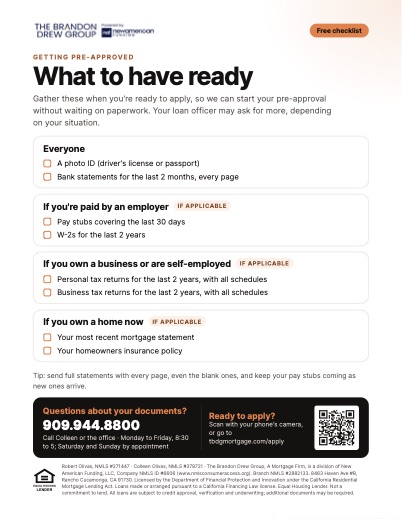 Free checklist · PDF · one pageWhat to have ready
The documents to gather when you're ready to apply, so we can start your pre-approval without waiting on paperwork.
Download the checklist
Questions buyers ask
What is a good debt-to-income ratio to buy a house?
There is no single number that works for every loan. Lower generally gives a lender more comfort. Fannie Mae's manual underwriting uses 36% as a standard maximum, up to 45% with a credit score and reserves, and its automated system can go up to 50%. CalHFA pairs 45% or 50% with different credit scores, depending on the loan type. Your credit, savings and loan type all play a part, so the right target depends on your file. Guidelines change; we confirm current limits on the day you call.
→ Read: What underwriters look for
What is the difference between front-end and back-end DTI?
Front-end DTI counts only your housing cost, divided by your gross monthly income. Back-end DTI counts housing cost plus all your other monthly debts, such as car loans, student loans and card minimums, divided by the same income. Most published limits, including the ones in this guide, are back-end limits. When someone asks what DTI you need, they usually mean the back-end number. Some guidelines, such as HUD's FHA manual underwriting matrix, also set a front-end number.
Does rent count in debt-to-income?
Usually not. Your new housing payment replaces rent in the calculation, because the new housing cost is what the loan will add. If you pay rent today and are buying, your DTI is built from your debts plus the new housing cost, not from your old rent. Rent can still matter in other ways, for example as part of your history of paying on time. Bring your lease and a few months of payment records to your first conversation so we can talk through your whole picture.
Can I get a loan with a DTI over 45%?
Sometimes. Fannie Mae's guide says its automated system allows up to 50%, and CalHFA's matrices allow 50% with a credit score of 700 for several loan types. GSFA says up to 50% may qualify. Each comes with conditions, such as credit score, and none of it is a promise. A lender's own added rules, called overlays, can also be stricter; We look at your whole file and tell you plainly what looks possible.
Do VA loans have a DTI limit?
VA loans put more weight on residual income, the money left in your monthly budget after your major obligations are paid, than on one hard DTI cap, and a higher DTI gets a closer look. If your VA loan is paired with CalHFA, CalHFA's matrix pairs 45% with a credit score of 640, or 50% with 700, through the automated system. We explain how the VA reviews your file on your call.
→ Read: What underwriters look for
What debts do lenders count in DTI?
Lenders generally count the minimum monthly payments on car loans, student loans, credit cards, personal loans and court-ordered payments, plus the housing cost of the home you want. They generally do not count groceries, utilities, phone service or subscriptions. How a student loan or a co-signed loan is counted can vary by loan type; Fannie Mae's guide (B3-6-05) has specific rules for both. We review your credit report with you so nothing surprises you later.
→ Read: What underwriters look for
Will paying off a credit card help my DTI?
It can. A lower balance usually lowers the minimum payment, which lowers your monthly debts. Paying a card off entirely removes that minimum. Before you do it, ask us, because using the savings you need for closing costs and reserves can leave the file weaker. Also, avoid closing the account without asking; it can affect your credit score. We help you decide which debt to pay first.
How much does it cost to have you check my DTI?
There is no charge for a first conversation, so there is no charge to talk through your DTI with us. A first call is a good place to start. Bring a rough idea of your income and your monthly debts. We will walk through the ratio with you, look at current limits for the loan types you are considering, and tell you honestly what looks possible and what could make it stronger. If now is not the right time, we will say so and help you plan.
Sources16 sources · show all
Check each page directly. Guidelines change. Sources below were checked October 28, 2026.
- Fannie Mae Selling Guide, B3-6-02, Debt-to-Income Ratios: https://selling-guide.fanniemae.com/sel/b3-6-02/debt-income-ratios
- CalHFA FHA and government loan matrix (01/01/2026): https://www.calhfa.ca.gov/homeownership/materials/files/tool-matrix-gov.pdf
- CalHFA conventional loan matrix (01/01/2026): https://www.calhfa.ca.gov/homeownership/materials/files/tool-matrix-conventional.pdf
- CalHFA MyHome Assistance Program: https://www.calhfa.ca.gov/homeownership/programs/myhome.pdf
- Golden State Finance Authority, GSFA Platinum: https://gsfahome.org/programs/dpa/platinum.shtml
- Consumer Financial Protection Bureau, loan options (lenders must document and verify income, employment, assets, debts and credit history; checked 2026-10-28): https://www.consumerfinance.gov/owning-a-home/loan-options/
- AnnualCreditReport.com, the official site for free credit reports: https://www.annualcreditreport.com
- U.S. Department of Veterans Affairs, VA home loans: https://www.va.gov/housing-assistance/home-loans/
- 38 CFR 36.4340 (VA underwriting standards, residual income): https://www.law.cornell.edu/cfr/text/38/36.4340
- U.S. Department of Housing and Urban Development, Mortgagee Letter 2026-11 (FHA manual underwriting DTI, Handbook 4000.1 II.A.5.d.viii): https://www.hud.gov/sites/default/files/hudclips/documents/2026-11hsgml.pdf
- Fannie Mae Selling Guide, B3-6-05 (student loans and debts paid by others): https://selling-guide.fanniemae.com/sel/b3-6-05/monthly-debt-obligations
- Fannie Mae Selling Guide, added November 8, 2026: B3-3.1-04 (employment verification before the note date): https://selling-guide.fanniemae.com/sel/b3-3.1-04/verbal-verification-employment and B3-6-01 (new debts before closing): https://selling-guide.fanniemae.com/sel/b3-6-01/general-information-liabilities
- New American Funding, why NAF ("minimal overlays," "manually underwriting"): https://www.newamericanfunding.com/careers/whynaf (checked November 8, 2026)
- Golden State Finance Authority, Participating Lenders: https://gsfahome.org/programs/dpa/lenders.aspx
- USDA property eligibility tool: https://eligibility.sc.egov.usda.gov/
- NMLS Consumer Access: https://www.nmlsconsumeraccess.org
Disclosures
Robert Olivas, NMLS #271447. Colleen Olivas, NMLS #379721. The Brandon Drew Group, a division of New American Funding, LLC, Company NMLS ID #6606 (www.nmlsconsumeraccess.org). Branch NMLS #2882133. 8463 Haven Avenue, Suite B, Rancho Cucamonga, CA 91730.
Equal Housing Lender.
Licensed by the Department of Financial Protection and Innovation under the California Residential Mortgage Lending Act. Loans made or arranged pursuant to a California Financing Law license.
Debt-to-income limits depend on the loan type, credit score and the full review of your file, and they can change without notice. Guidelines change; we confirm current limits on the day you call. Assistance programs have eligibility rules, funds are limited and subject to availability, and they are not available to everyone. This is for information only. It is not a commitment to lend or a rate quote. Loans are subject to credit approval and underwriting. Not tax or legal advice. Examples are made up and for illustration only. For licensing information, visit www.nmlsconsumeraccess.org.